
The formula you take. Put to the ultimate test.
University researchers tested the complete NOVOS Core formula in a six-month, placebo-controlled human study.
MANUSCRIPT UNDER PEER REVIEW
Putting the results in context
NOVOS Core showed larger improvements in cardiovascular markers than published averages for exercise, diet, and omega-3.*
The STAMINA trial measured endothelial function, arterial flexibility, and systolic blood pressure against placebo.
*Cross-study comparison, not head-to-head. Comparator values are published averages from separate studies with different populations and protocols.
+2.9%
Flow-mediated dilation (FMD) — primary endpoint
improvement in endothelial function vs. placebo
Published aerobic exercise average: +1.2%
The vessel lining responded more effectively when greater blood flow was needed. A +1% change is considered medically relevant.
−1.18 m/s
improvement in arterial flexibility vs. placebo
Published aerobic exercise average: −0.58 m/s
Large arteries transmitted each heartbeat’s pressure wave more favorably. This typically speeds up by 1 m/s every 10 years; NOVOS Core slowed it down by 1.18 m/s after six months.
−6.1 mmHg
improvement in systolic blood pressure† vs. placebo
Published aerobic exercise average: −4.0 mmHg
Healthy systolic blood pressure was supported in adults who were not hypertensive on average. A 2 mmHg improvement is considered medically relevant.
Placebo-adjusted differences at six months. † For blood pressures already within the normal range.
The complete formula, tested in people.
Why these markers
Blood vessels age too. Quietly, and for decades.
Arteries stiffen and the vessel lining becomes less responsive as we get older. These changes are gradual and usually produce no symptoms, so most people never think about them until much later in life.
That is why STAMINA measured vascular function directly — endothelial function, arterial flexibility and blood pressure — rather than relying on how people felt. These are objective, measurable markers of how the cardiovascular system is functioning today.
NOVOS Core was formulated to target the twelve hallmarks of aging, not cardiovascular function specifically. These vascular results suggest that supporting the biology of aging may have favorable downstream effects on organ health. We began with heart health because cardiovascular disease is the leading cause of death worldwide.

Educational context only. NOVOS Core is a dietary supplement and is not intended to diagnose, treat, cure or prevent any disease, including cardiovascular disease. These statements have not been evaluated by the Food and Drug Administration.

Why this research matters
Ingredients can counteract each other. That’s why studying the finished product is critical.
Most supplement evidence stops at individual ingredients. Biological research shows that combining ingredients can counteract their effects, and sometimes even lead to negative effects. NOVOS went further: the complete Core formula people use every day was compared with an identical-looking and tasting placebo.
Improvement wasn’t the exception. It was universal.
The question behind every study is personal: “Could this work for me?” In this analysis, every NOVOS Core participant showed a favorable change, and nearly all did so across multiple cardiovascular measures.

Adults over 40 participated in the six-month study.
100%
showed a favorable change in at least 1 of 3 cardiovascular measures*
95.7%
showed favorable changes in 2 to 3 cardiovascular measures*
*Exploratory post hoc analysis of the NOVOS Core STAMINA participants with complete 6-month data across all 3 measures. Favorable direction: FMD ↑, PWV ↓, SBP ↓.
61 adults randomized
33 assigned to NOVOS Core
28 assigned to placebo
How it was designed
- Balanced male and female participants over age 40
- One NOVOS Core or placebo dose daily
- Six months of daily dosing
- Randomized allocation
- Double blind
- Placebo controlled
- Conducted at the University of Surrey
Preprint. Manuscript under peer review.
Who ran the study?

Professor Christian Heiss is Professor of Cardiovascular Medicine at the University of Surrey, an NHS consultant interventional angiologist, and an internationally recognized expert in vascular medicine and human cardiovascular interventions.
University of Surrey biography ↗Funding and research control
NOVOS supplied the intervention and placebo and provided an unrestricted research grant. NOVOS had no role in data collection, primary statistical analysis, or interpretation. The academic investigators retained control of the study data and the decision to publish.
A closer look
See how much Core outperformed the placebo.*
Select a measure to see exactly how the comparison was calculated and what it can, and cannot, tell us.
Flow-mediated dilation (FMD)
Blood vessels responded more effectively when greater blood flow was required.
FMD measures how effectively an artery widens in response to increased blood flow. It directly assesses the responsiveness of the vessel lining, called the endothelium.
Change at six months, in percentage points. Zero line shown; axis is symmetric.
- Core change
- +2.6 percentage points
- Placebo change
- −0.1 percentage points
- NOVOS Core vs placebo
- +2.9 percentage points
- 95% confidence interval
- 2.1 to 3.8
- Significance
- p < 0.0001
- Endpoint
- Primary endpoint
- Sample
- n = 43
Interpretation
The prespecified primary endpoint showed a large and statistically strong improvement versus placebo.
What it does not prove
FMD is a validated physiological marker, but this study did not measure heart attacks, strokes, or lifespan.
Carotid-femoral pulse wave velocity (PWV)
Large arteries transmitted the pressure wave more favorably.
PWV measures how quickly a pressure wave moves through the arteries. Lower values generally indicate more flexible large arteries.
Change at six months, in m/s. Zero line shown; axis is symmetric.
- Core change
- −0.78 m/s
- Placebo change
- +0.56 m/s
- NOVOS Core vs placebo
- −1.18 m/s
- 95% confidence interval
- −2.00 to −0.36
- Significance
- p = 0.006 (six-month ANCOVA)
- Endpoint
- Secondary endpoint
- Sample
- Six-month ANCOVA comparison
- Repeated-measures analysis
- Time-by-treatment interaction p = 0.029
Interpretation
The result was consistent with a meaningful improvement in arterial flexibility.
What it does not prove
Population research finds PWV tends to worsen by roughly 1 m/s per decade. The study did not test whether Core reversed arterial aging.
Seated systolic blood pressure
Systolic blood pressure improved even though participants were not hypertensive on average.
Systolic blood pressure is the peak pressure in the arteries as the heart contracts. Baseline means were approximately 128 mmHg in the Core group and 125 mmHg in the placebo group.
Change at six months, in mmHg. Zero line shown; axis is symmetric.
- Core change
- −8.5 mmHg (within-group)
- Placebo change
- −1.5 mmHg (within-group)
- NOVOS Core vs placebo
- −6.1 mmHg versus placebo
- 95% confidence interval
- −10.9 to −4.9
- Significance
- p = 0.014
- Endpoint
- Secondary endpoint
- Sample
- n = 43
- Baseline means
- ≈128 mmHg Core · ≈125 mmHg placebo
Interpretation
The placebo-adjusted difference was substantial for a generally healthy population whose average baseline blood pressure was not in the hypertensive range.
What it does not prove
This supports healthy systolic blood pressure in a non-hypertensive population. It does not show that Core treats hypertension.
Six-month results are the headline of this trial. The acute measurement is secondary: FMD was also recorded one hour after the first dose.
- Core change after one dose
- +3.4 percentage points
- Placebo change
- −0.2 percentage points
- Core over Placebo
- +3.9 percentage points
- 95% confidence interval
- 2.7 to 5.1
Measured one hour after the first dose, consistent with the manuscript.
Values shown are the six-month analyses reported in the preprint, which remains under peer review.
Complete record
The full picture makes the positive results more impactful.
What the study found
- A statistically strong improvement in the primary FMD endpoint at 1 hour and 6 months
- Statistically strong improvements in PWV at 6 months
- Statistically strong improvements in systolic blood pressure (for blood pressure already in the normal range) at 6 months
- A favorable change in SCORE2 / SCORE2-OP
- Results that did not materially change in the per-protocol sensitivity analysis
What did not significantly change
- Diastolic blood pressure
- Central systolic blood pressure in the primary between-group analysis
- Aortic augmentation index
- Total cholesterol
- HDL-C
- Triglycerides
What the study cannot establish
- Prevention of heart attacks or strokes
- Extension of human lifespan
- Effects in people with established cardiovascular disease
- Whether every Core user will experience the same magnitude
- Single-center trial
- Complete-case analysis without imputation
- Generally healthy, non-smoking population
- Multi-component formula prevents attribution to individual ingredients
- Secondary outcomes should be confirmed in a larger study

This is the formula that was studied.
The same formula available for sale is what was studied for six months against placebo.
Individual results may vary. NOVOS Core is not intended to diagnose, treat, cure, or prevent any disease.
Putting the magnitude in context
These changes were not merely detectable. They were exceptional.*
NOVOS reviewed randomized trials of commonly marketed heart-health supplement ingredients, retaining both positive and null findings. In strict, like-for-like fasted comparisons, Core’s effects ranked at the top.
Across the 55 strict, like-for-like fasted comparisons NOVOS reviewed, no other supplement matched Core’s effect size on all three vascular markers at once.
34 of 36
Blood pressure
Core's effect was greater than 94% of strict fasted comparisons.
8 of 8
Arterial flexibility
Core's effect was larger than 100% of strict fasted comparisons.
7 of 11
Endothelial function
Core's effect was larger than the majority of strict fasted comparisons.

How Core compares
Cross-study comparison, not head-to-head. Values come from separate studies with different populations and protocols.
Healthy Blood Pressure (SBP)
The peak pressure inside the arteries as the heart contracts.
A 2 mmHg improvement in systolic blood pressure is considered medically relevant. NOVOS Core's placebo-adjusted difference was large and meaningful for a generally healthy, non-hypertensive population.
NOVOS CORE VS. OTHER SUPPLEMENTS
NOVOS Core outperforms by
2.4x
Omega-3 is included as the strongest single comparator in the dataset. Its values are full-benefit averages across all qualifying trials, not a selection of positive-only studies.
NOVOS Core outperforms by
2.1x
NOVOS CORE VS. LIFESTYLE INTERVENTIONS
Beneficial effects on maintenance of healthy blood pressure already within the normal range

Arterial Flexibility (PWV)
How quickly each heartbeat's pressure wave travels through large arteries.
Population research finds PWV tends to worsen by roughly 1 m/s per decade, which gives a sense of scale.
NOVOS CORE VS. OTHER SUPPLEMENTS
NOVOS Core outperforms by
2.7x
Omega-3 is included as the strongest single comparator in the dataset. Its values are full-benefit averages across all qualifying trials, not a selection of positive-only studies.
NOVOS Core outperforms by
5.9x
NOVOS CORE VS. LIFESTYLE INTERVENTIONS
NOVOS Core helped support healthy arterial flexibility, which is rare for a dietary supplement

Endothelial Function (FMD)
How effectively the vessel lining widens when more blood flow is needed.
Population research associates each 1-percentage-point higher FMD with lower cardiovascular event rates; a +1% change is considered medically relevant.
NOVOS CORE VS. OTHER SUPPLEMENTS
NOVOS Core outperforms by
1.2x
Omega-3 is included as the strongest single comparator in the dataset. Its values are full-benefit averages across all qualifying trials, not a selection of positive-only studies.
NOVOS Core outperforms by
1.4x
NOVOS CORE VS. LIFESTYLE INTERVENTIONS
Provides support for healthy endothelial function

| Supplement | Healthy Blood Pressure | Arterial Flexibility | Endothelial Function |
|---|---|---|---|
| NOVOS Core | ●●● | ●●● | ●●● |
| Omega-3 / Fish oil | ●● | ●● | ●● |
| Beetroot / Nitrate | ●● | ● | ●● |
| Magnesium | ● | ✕ | ✕ |
| Folate | ● | – | ●● |
| L-Arginine | ● | – | ●● |
| Garlic | ●● | ✕ | ● |
| L-Carnitine | ● | – | – |
| Spirulina | ● | – | ✕ |
- ● = a smaller demonstrated effect (more ● = larger, up to 3)
- ✕ = tested, but no statistically significant effect demonstrated
- – = not evaluated in the qualifying dataset
Not a head-to-head comparison. These values come from separate studies involving different populations and protocols.
NOVOS Core is not a replacement for exercise, diet, sleep, and other healthy behaviors, which remain foundational.
3,388
PubMed records identified
3,384
records screened
147
qualifying RCTs
142
unique competitor studies
171
study-marker comparisons
55
strict fasted comparisons
Lifestyle context
Evidence hierarchy
NOVOS completed the full evidence hierarchy. Most supplements never finish a single level with their complete formula.

The gold standard: the best evidence on whether the finished formula changes measured human physiology versus placebo.

Useful for detecting promising before-and-after signals, and promising paths for placebo-controlled human clinical research.

Can measure lifespan and healthspan directly under controlled conditions, to see if hypotheses translate into mammalian outcomes.

Can reveal mechanisms under tightly controlled laboratory conditions, to help understand how a formulation biologically works.
A preliminary signal in biological pace of aging.*
1.00
0.94
−6.1% average change
change in average biological pace of aging over six months
Study facts
- Conducted by NOVOS and a third-party epigenetic lab
- 12 participants enrolled: six women and six men
- Ages 39 to 76
- NOVOS Core + NOVOS Boost
- Six months
- Before-and-after design, no placebo group
- 11 participants completed follow-up
- One participant withdrew because of noncompliance
Results
- Average DunedinPACE change: −6.1%
- 8 of 11 participants improved beyond the test’s reported error margin
- One participant changed by −14%
- Reported within-group p = 0.001
- No participant had a statistically meaningful worsening reported
Eight people improved beyond the test’s reported error margin; three showed no statistically meaningful change in either direction. Nobody’s pace of aging increased in the study.
Interpretation
The consistency of the signal supports further randomized research into Core + Boost and biological pace of aging.
- DunedinPACE is an epigenetic test. It reads chemical marks on DNA and returns an estimate of how quickly a person's biology appears to be changing, expressed as a pace: a value near 1.0 means roughly one year of biological change per calendar year. It is an estimate derived from a reference population, not a direct measurement of lifespan or health outcomes.
Core increased median survival in aged mice.*
Median survival, in days
Core versus control: approximately +18% median survival, log-rank p = 0.045. The senolytic arm (navitoclax plus BAM15) served as a positive control; its median was numerically similar to Core.
Essential caveats
- Male mice were studied.
- Mouse results do not demonstrate human lifespan extension.
- The frailty result approached rather than reached statistical significance.
- Memory performance showed a favorable trajectory but was limited by baseline differences and small surviving control numbers.
Study facts
- 38 male C57BL/6J mice
- Control group
- Continuous multi-ingredient nutraceutical group using the Core formulation
- Senolytic positive-control group using navitoclax plus BAM15
- Intervention began at 20 months of age
- Frailty and cognition assessed longitudinally
- Manuscript under peer review
Supporting evidence
Additional studies supporting the patent pending NOVOS Core formula
Skin firmness
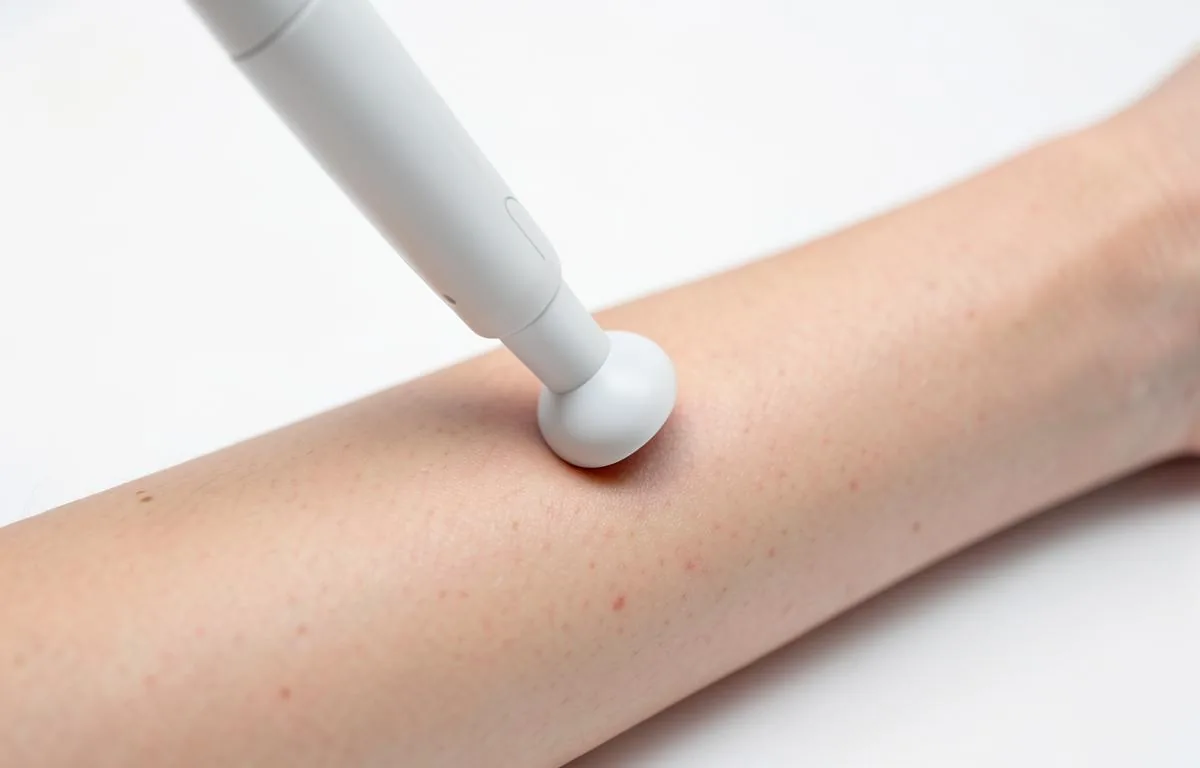
Skin firmness was measured objectively with an indentometer.
- NOVOS Core
- Six months
- Four participants
- Objective indentometer measurement
- All four reportedly improved
- Average improvement: 22% (range 12%–40%)
WHAT TO KEEP IN MINDVery small pilot. The result is hypothesis-generating and requires confirmation in a larger controlled study.
DNA damage in a 3D human skin model
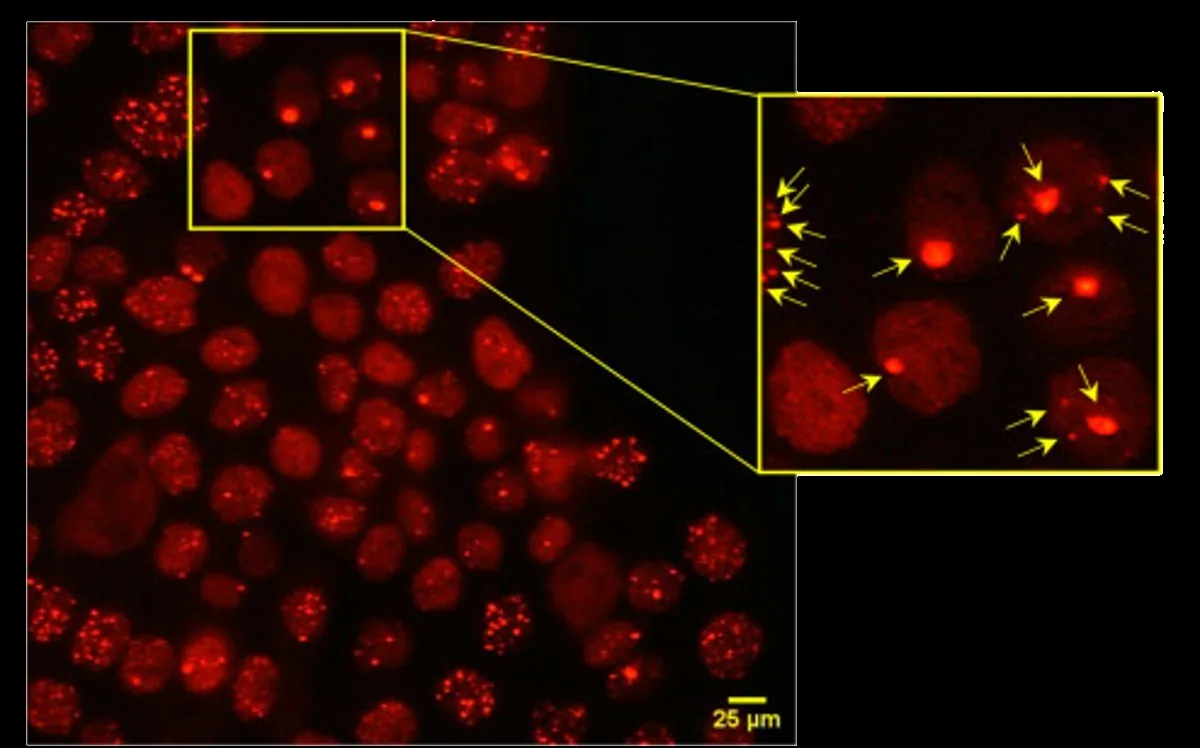
53BP1 DNA-damage foci in 3D human keratinocytes. Punzo et al., Nutrients 2024;16(16):2770 (CC BY 4.0).
- Published in Nutrients (2024) after peer review
- Conducted at Alma Mater Studiorum — University of Bologna
- 3D human keratinocyte (skin) model
- The NOVOS formula plus six simpler formulations were tested
- It significantly reduced DNA damage after neocarzinostatin injury
- It significantly reduced intracellular H₂O₂ after pro-oxidant injury
WHAT TO KEEP IN MINDPeer reviewed and performed in laboratory skin cells (in vitro).
Oxidative DNA damage
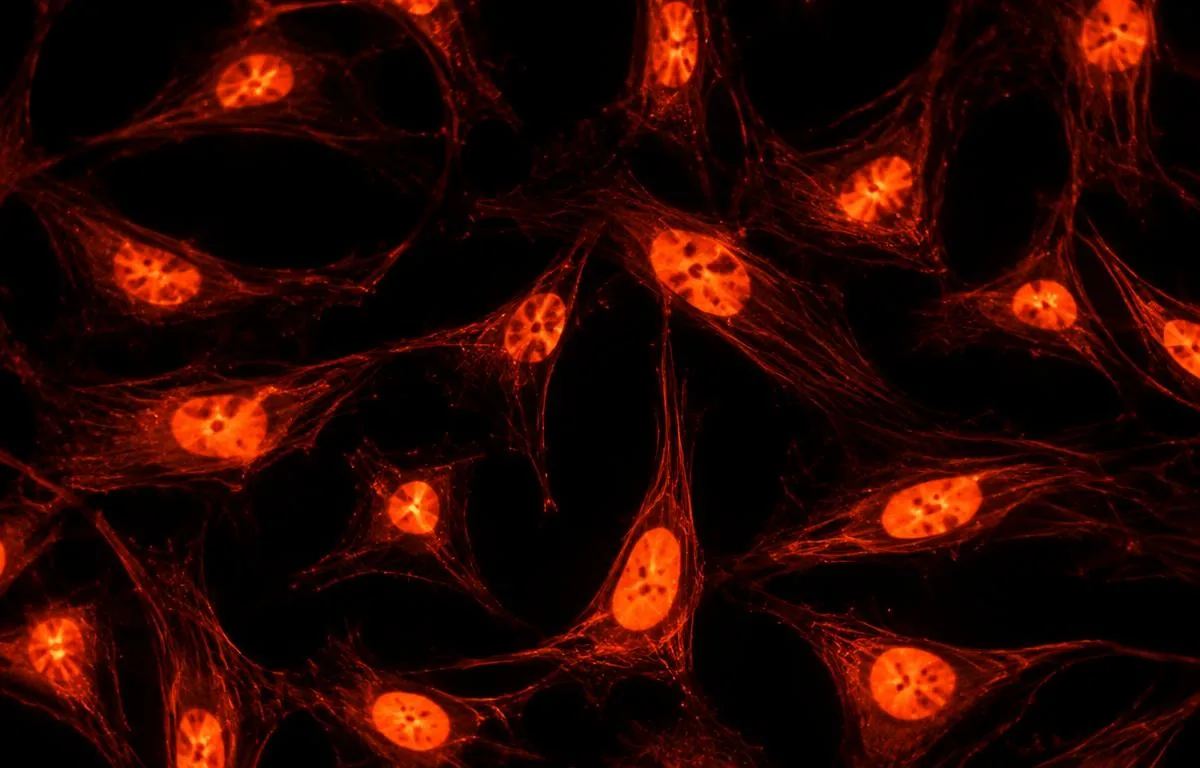
Human endothelial cells treated before irradiation, then assayed for 8-OHdG.
- HUVEC human-cell model
- Core + Boost formulation
- Cells treated before irradiation
- Oxidative DNA damage measured using 8-OHdG
- Average reduction versus irradiated controls: 68%
- Maximum reported reduction: 77%
WHAT TO KEEP IN MINDThis shows an effect under controlled cell-culture conditions (in vitro).
Senescent-cell research
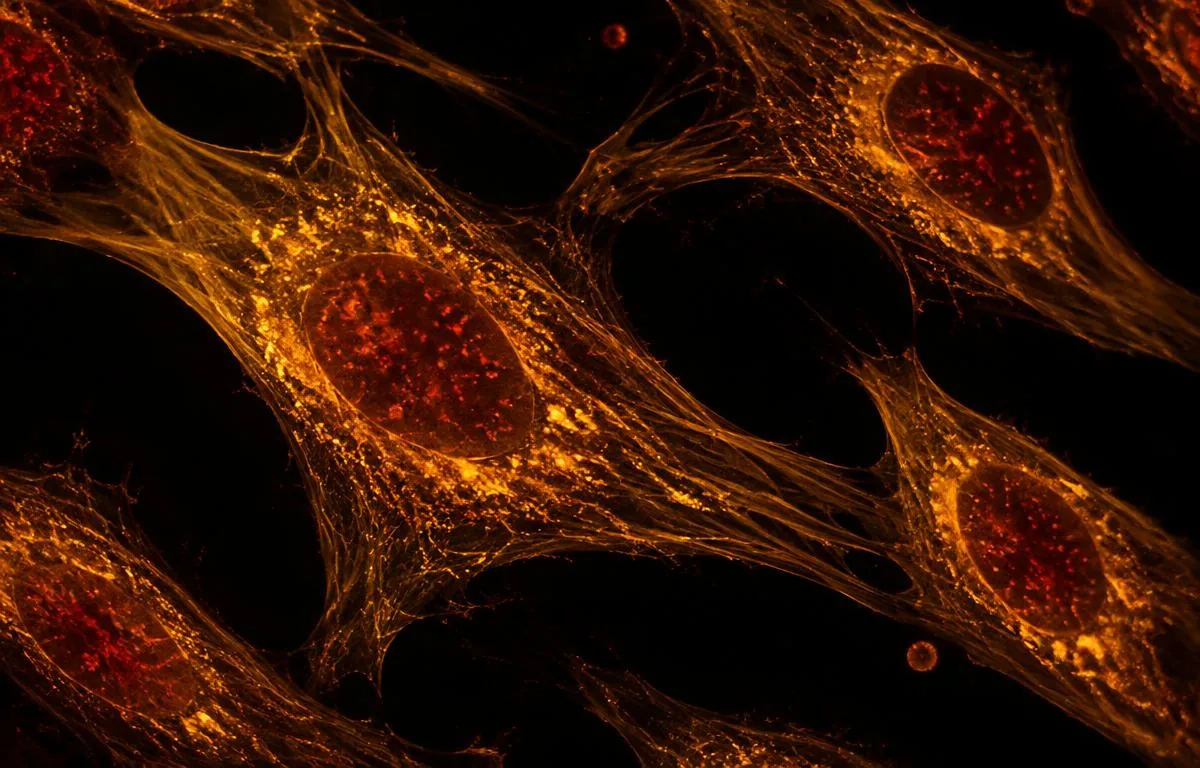
Irradiated human fibroblasts showing the enlarged morphology of senescent cells.
- Irradiated human fibroblasts
- Three-day treatment
- Reduced nuclear size
- Reduced reactive oxygen species release
- Reduced IL-6 secretion
- No senolytic activity demonstrated
WHAT TO KEEP IN MINDThis is mechanistic in vitro support.
The formula began with a much larger body of research.
950+
longevity-relevant ingredient studies reviewed
This literature informed the selection of Core’s ingredients, doses, and biological targets. Ingredient research explains the scientific rationale for the formula. It does not replace finished-product evidence.
950+ refers to ingredient-level studies reviewed during formulation — not 950 trials of NOVOS Core.
Browse by hallmark of aging
Genomic instability
Accumulated DNA damage and reduced repair capacity in ageing cells.
Telomere attrition
Progressive shortening of the protective caps at the ends of chromosomes.
Epigenetic alterations
Drift in the chemical marks that determine which genes are switched on.
Loss of proteostasis
Declining ability to fold, maintain and clear cellular proteins.
Disabled macroautophagy
Reduced recycling of damaged cellular components.
Deregulated nutrient sensing
Altered signalling in the pathways that read nutrient availability.
Mitochondrial dysfunction
Less efficient cellular energy production and more oxidative stress.
Cellular senescence
Cells that stop dividing but persist and secrete inflammatory signals.
Stem cell exhaustion
Reduced capacity to regenerate and replace worn-out tissue.
Altered intercellular communication
Shifts in the hormonal and immune signals cells exchange.
Chronic inflammation
Low-grade, persistent inflammatory signalling across tissues.
Dysbiosis
Changes in the composition and function of the gut microbiome.
For the careful reader
Questions a careful reader should ask.
Was the finished Core formula tested?
Yes. The human trial used the complete 15-gram multi-component NOVOS Core formulation, rather than testing one isolated ingredient.
Why were 61 people randomized but only 43 included in the primary six-month analysis?
Sixty-one received their assigned intervention. The primary complete-case analysis included the 43 participants with both baseline and six-month FMD measurements. Attrition is an important limitation.
Was the study peer reviewed?
The manuscript is a preprint and remains under peer review. That status is stated everywhere the trial is summarized on this page.
Who funded the study?
NOVOS supplied the study products and provided an unrestricted research grant. The manuscript states that the academic investigators controlled data collection, primary analysis, interpretation, and the decision to publish.
Did every measurement improve?
No. FMD, PWV, systolic blood pressure, and SCORE2/SCORE2-OP showed favorable results. Several other measurements, including lipids and diastolic blood pressure, did not significantly differ between groups.
Does STAMINA show that Core prevents heart disease?
No. It showed favorable effects on vascular and hemodynamic markers. It was not designed to measure cardiovascular events.
Does any NOVOS study prove that Core extends human lifespan?
No. Lifespan was measured in mice, not humans.
Can the study determine which ingredients caused the effects?
No. It tested the full formula and cannot isolate the contribution of each ingredient.
Were the results the same for everyone?
No. Group averages do not mean that every participant experienced the same response. Individual results will vary.
THE FORMULA STUDIED IN THE STAMINA TRIAL
Start with NOVOS Core.
Twelve ingredients designed around the interconnected biology of aging. One packet daily. Tested as a complete formulation across randomized, double-blind, placebo-controlled human research; animal lifespan; and in vitro research.
Individual results may vary. NOVOS Core is not intended to diagnose, treat, cure, or prevent any disease.
References
Sources
Every quantitative claim on this page comes from one of the sources below. The STAMINA manuscript is a preprint under peer review. Independent literature is listed separately from NOVOS-funded research.
The STAMINA human trial
- STAMINA human trial manuscriptssrn.com/abstract=6241278 ↗
- STAMINA trial registrationclinicaltrials.gov — NCT06145087 ↗
- Principal investigator — Professor Christian Heiss, University of Surreysurrey.ac.uk/people/christian-heiss ↗
Other NOVOS Core studies
- Mouse lifespan and healthspan preprintpreprints.org/manuscript/202512.2725 ↗
- University of Bologna skin-cell study — Nutrients 2024;16(16):2770mdpi.com/2072-6643/16/16/2770 ↗
- Pace-of-aging pilot, skin firmness, DNA damage and senescence researchnovoslabs.com/scientific-evidence-behind-novos ↗
Benchmark and methodology
- Cardiovascular literature benchmark and methodologynovoslabs.com/healthspan-benefits ↗
- DunedinPACE method — Belsky et al., eLife 2022doi.org/10.7554/eLife.73420 ↗
- SCORE2 risk algorithm — European Heart Journal 2021doi.org/10.1093/eurheartj/ehab309 ↗
Why these markers matter — independent literature
- Flow-mediated dilation and cardiovascular events — Inaba et al., meta-analysis 2010doi.org/10.1007/s10554-010-9616-1 ↗
- Pulse wave velocity and cardiovascular events — Vlachopoulos et al., JACC 2010doi.org/10.1016/j.jacc.2009.10.061 ↗
- Blood-pressure lowering and outcomes — Ettehad et al., The Lancet 2016doi.org/10.1016/S0140-6736(15)01225-8 ↗
- Hallmarks of aging — Lopez-Otin et al., Cell 2023doi.org/10.1016/j.cell.2022.11.001 ↗